
A Sky with Shadows and Shooting Stars
This post was written by Slooh Gravity Guild Member Giang Long Luong
The night sky is always full of cosmic surprises, and August 12 marks a spectacular moment, when the sky will feature both a one-in-a-generation total solar eclipse in Europe and the Perseids meteor shower on the same day. Since a solar eclipse requires a New Moon, the meteor shower can be even easier to see. In fact, Slooh will have two Star Parties to capture these upcoming astronomical events.
To put into perspective, it has been more than 20 years since the last eclipse in mainland Europe (1999). There’s even more to come: in 2027 and 2028, 2 more solar eclipses will join the European Eclipse trio. Marking the first of the trio, the totality will go through Greenland, Iceland, Spain, and a bit of Northeastern Portugal for up to 2 minutes at 20:31 CEST. A short time for the Moon’s shadow, but absolutely worth it to capture.
What is a Solar Eclipse, though?
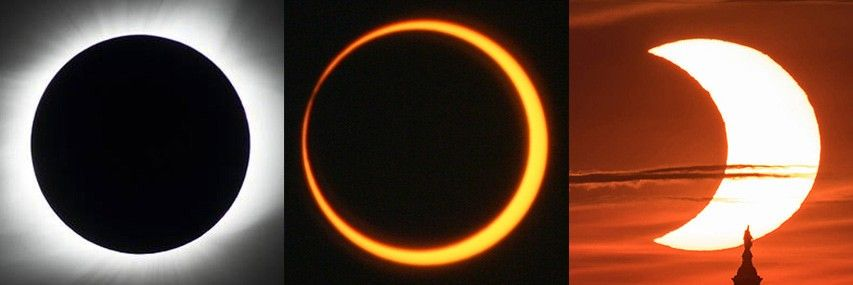
A solar eclipse happens when the Moon stands between the Sun and Earth, causing the Moon to cast a shadow on the Earth. It just happens that the Moon has the same size in the sky as the Sun, so when the Moon gets into the perfect position to block the Sun, only the Sun’s corona or atmosphere can be seen, backdropped against a night sky and the Moon’s shadow in the middle of the day.
The Moon orbits the Earth once a month, so why don’t we get a solar eclipse every month? Just like our Earth, the Moon’s orbit is tilted slightly, so the Moon often “misses” the Sun in the sky. When it does block the Sun partially, it’s called a partial eclipse. If the Moon aligns with the Sun, but a little far from the ideal distance, the Sun can form a fiery ring around the Moon, making an annular eclipse (“annulus” meaning “ring” in Latin). It’s also called the Ring of Fire!
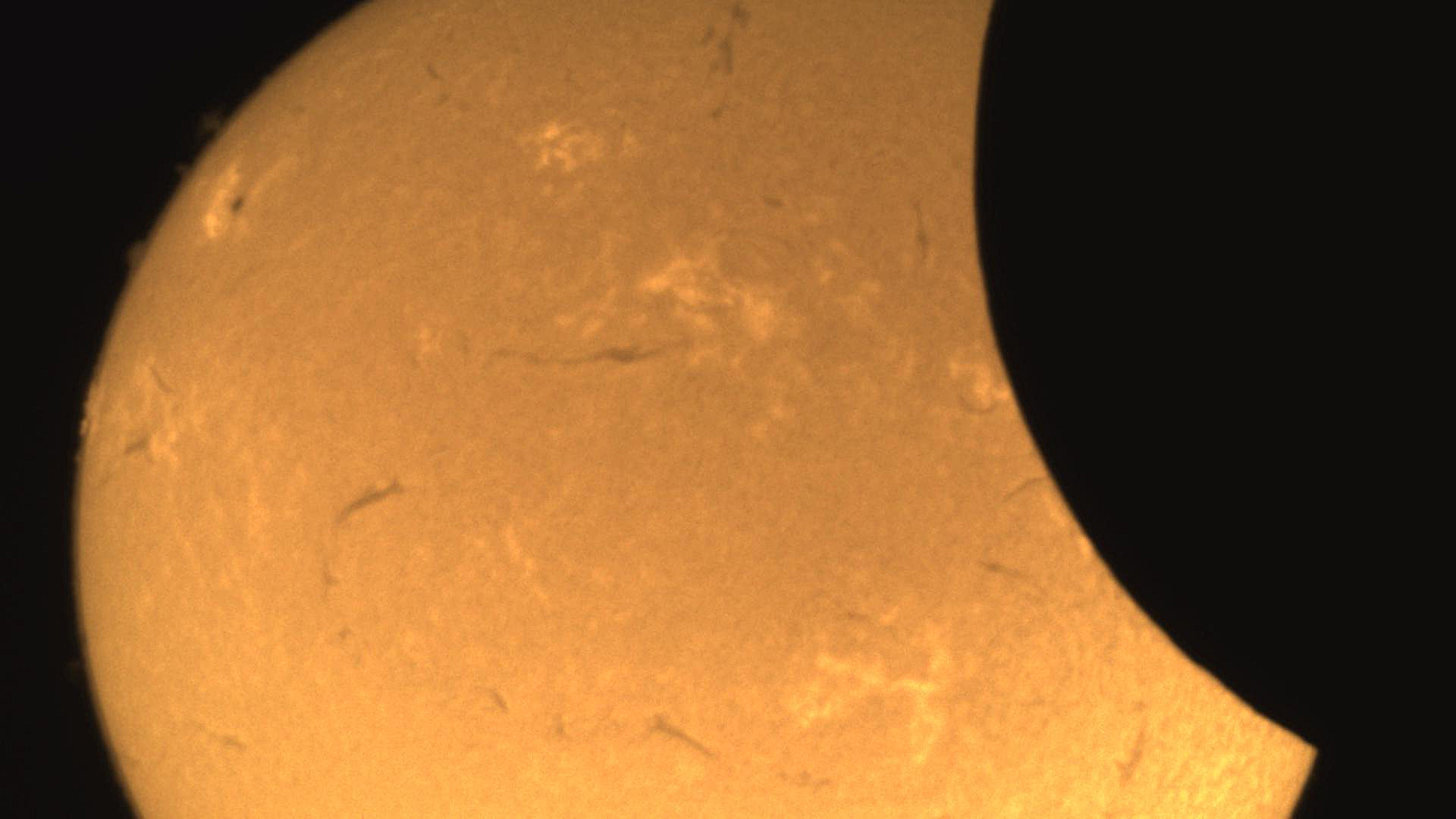
Partial Solar Eclipse captured on Slooh’s Canary Five telescope on March 29, 2025
The Science of Solar Eclipses
Beyond public outreach, solar eclipses also have many other applications in research. Since the Moon is blocking the Sun, scientists can study solar radiation, helping us understand the climate, space weather, and the radiation that affects the Earth’s magnetic field. In the lower atmosphere, balloon experiments (literally launching a balloon with scientific equipment) can measure the eclipse’s effects on ozone and study the atmosphere in different locations of Earth. This phenomenon isn’t unique to Earth either; solar eclipses have been pictured on Mars as well, giving us insights about Mars’s moons, Phobos and Deimos
Slooh and the Solar Eclipse
If you’re in Europe, you can likely capture this total solar eclipse live! If not in the range of totality, other parts of Europe can still experience a partial solar eclipse. This video from ESA covers how to watch the solar eclipse if you’re in Europe: https://www.esa.int/ESA_Multimedia/Videos/2026/07/How_to_safely_watch_a_solar_eclipse
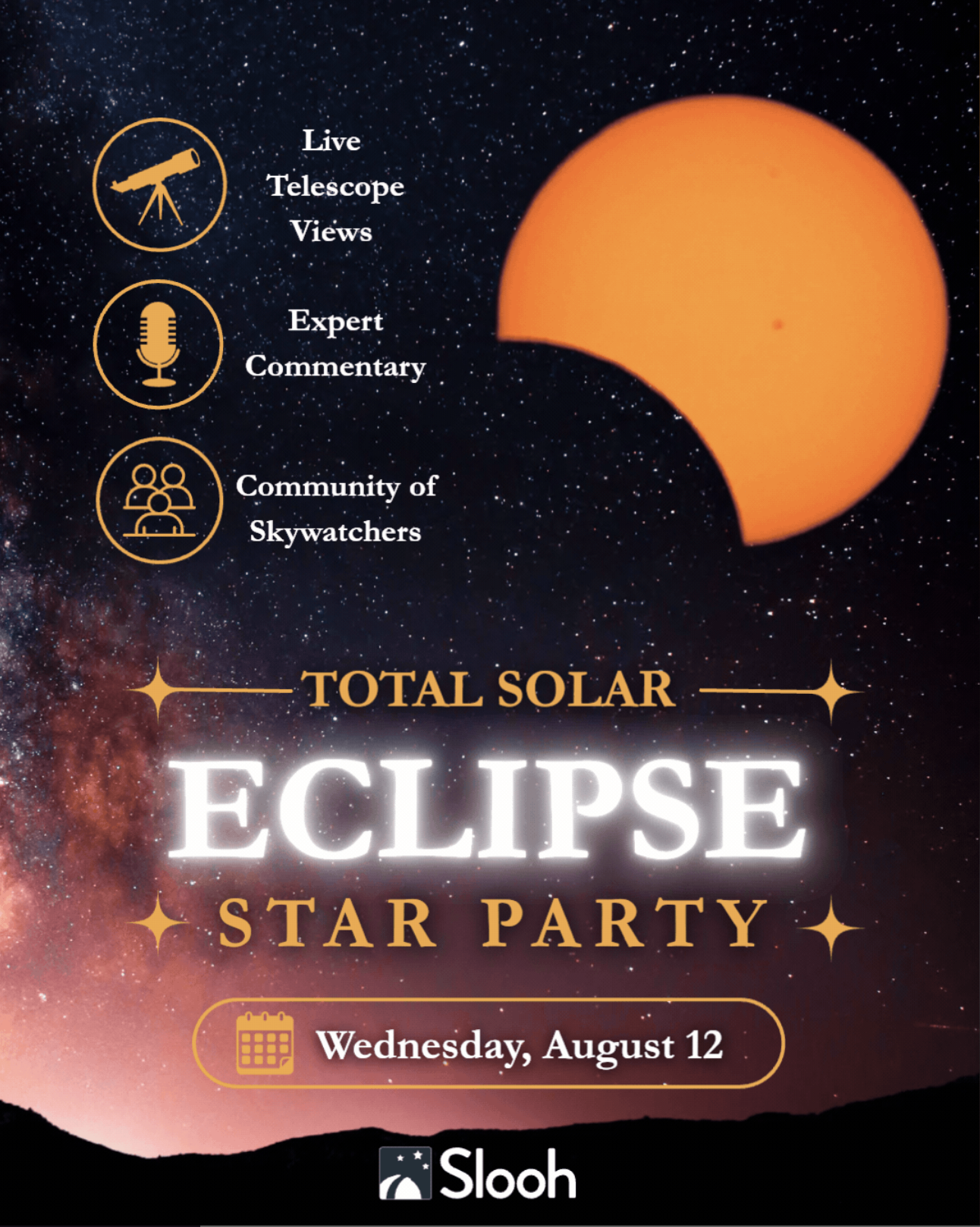
However, for all of us, we can watch live coverage of the Solar Eclipse on YouTube from channels like NASA and ESA, and also on Slooh! Slooh’s Total Solar Eclipse Star Party will provide live coverage from our own telescopes, comments from experts, and interaction with the Slooh community. We’re excited to see you there!
Slooh’s 2026 Solar Eclipse Star Party: https://app.slooh.com/shows/video-viewer/1256
A few hours after the Moon’s shadow, we’ll have another celestial event at the horizon, or should I say, at Perseus: the Perseids Meteor Shower. Shooting stars (not actual stars, of course) have been observed for more than a thousand years, but the science behind them is one of comets, orbital dynamics, and of course, our Sun!
First, though, why is it called the Perseids Meteor Shower? Meteor showers are named after the constellation they usually appear to radiate from, in this case, the Perseus constellation. A few meteors can be seen every night, but on certain times of the year, meteor showers allow you to see dozens more every hour. A few noticeable ones are the Orionids, Eta Aquarids, Geminids, and of course, the Perseids. You could probably imagine the constellations associated with these! (Telescopiids, anyone?)
Where do Shooting Stars Come from?
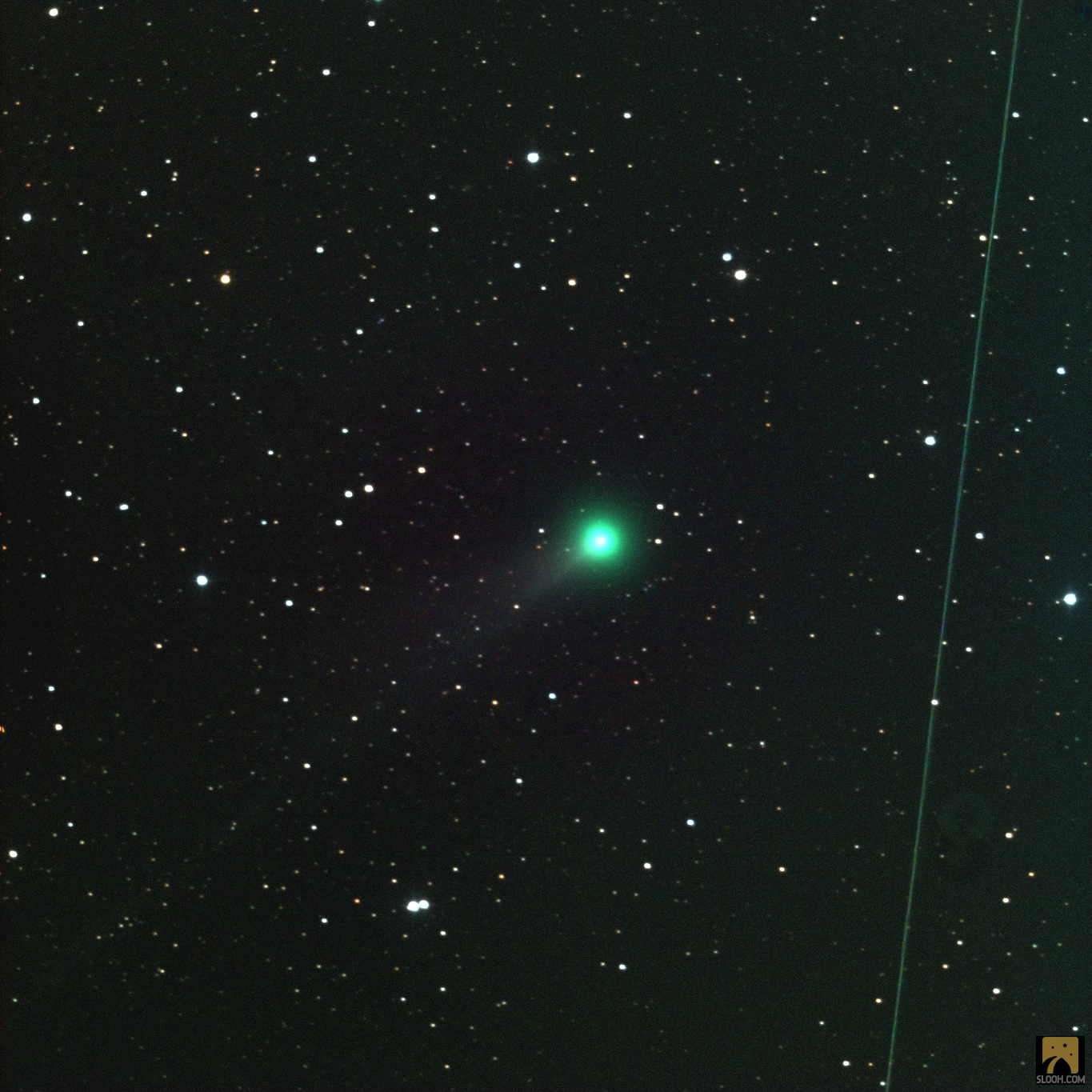
Although not truly stars, they do “shoot” through our atmosphere from broken-up comets (one pictured to the side!) or in rare cases, asteroids. These meteors are usually just pea-sized that burn up in the atmosphere, creating their glow and starry show. So, thank the atmosphere for both protecting us from mini space bombs (and much more!) and giving us a starry show!
Comet C/2025 R3 PanSTARRS captured on the Chile Two telescope mission scheduled by XrayDeltaOne.2004
The Perseids is one of the brightest meteor showers, sometimes allowing us to see more than 50 meteors an hour under dark skies. They originate froAs the dark sky continues to inspire science, we also affect the dark sky in our own way. With more than 16,600 tons of space debris and non-active satellites in Low Earth Orbit (LEO) and Geosynchronous Earth Orbit (GEO), they affect our skies much more than you might think.
Shooting Stars and Science
Meteors offer us a piece of our Solar System’s history and beyond. For example, when they impact bodies like the Moon, the impact craters formed are often studied for astrogeology research. On Earth, collecting meteorites is also a key activity for meteorite research, though they’re mostly collected in Antarctica, due to the white ice and dryness of the continent, preserving and differentiating them well from the surrounding environment. Future meteor showers can also be discovered with telescope platforms like Slooh for comet tracking.
Just a few hours after the Total Solar Eclipse Star Party, Slooh will also have a Star Party for the Perseids Meteor Shower, which can be found here: https://app.slooh.com/shows/video-viewer/1257
Satellites and the Dark Sky
“Darkness is Divine.” - Slooh team, https://www.slooh.com/vision-mission-values
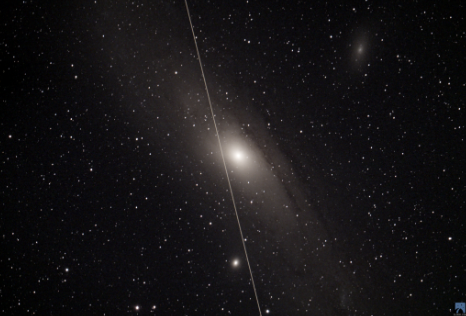
As the dark sky continues to inspire science, we also affect the dark sky in our own way. With more than 16,600 tons of space debris and non-active satellites in Low Earth Orbit (LEO) and Geosynchronous Earth Orbit (GEO), they affect our skies much more than you might think.
The Andromeda Galaxy taken by Canary Three with a satellite streak
- Blocking the Field of View
Similar to satellite streaks you might encounter on Slooh images (like the one above), space debris affects optical astronomy, blocking crucial data from telescopes. Though they aren’t much when considering large images like those from Slooh telescopes, for fainter objects and more sensitive telescopes, these streaks can interfere a lot with the observation.
- Complicating Satellite Communication
Inactive satellites, due to their radio-emitting hardware, often interfere radio signals between other satellites, causing garbled communication. The introduction of satellites is also making satellite laser technology harder to avoid unwanted targets.
- Lighting up the Sky
A recent European Southern Observatory (ESO) report has indicated that bright satellites can contribute into the atmosphere’s glow itself. Larger and brighter satellites are being developed, and even more are being launched; these would overwhelm the telescope’s sensors and render telescope observations being oversaturated.
Addressing these problems requires Space Situational Awareness (SSA). Through student discussions, sharing research, and even tracking space debris on Slooh, amateur astronomers and beyond can contribute tona better experience of our sky. So, on August 12, whether we’re looking at Perseus or the Moon’s shadow, we’re lucky to be on this blue planet, have this place in the universe, and be under the dome of our atmosphere. The sky lights us, and in the near future, hopefully, humanity, in a space-friendly way, shall light the sky.
Clear skies, and enjoy August 12!